SaaS User License
USD 20 per user / month
Named-user SaaS access for restaurant owners, managers, staff, finance, delivery, and support users.
View productRestaurant 2050
T24 Global product suite
Restaurant 2050 helps restaurant businesses sell, take orders, route kitchen work, manage delivery, support customers, review finance, and scale operations from one connected product story. Start with SaaS at USD 20 per user per month, or choose a sovereign on-premise path when your restaurant group needs customer-managed database, servers, privacy, backups, and transaction control.
Product offers
Restaurant 2050 is designed for B2B buyers who need practical restaurant operations software without waiting through a heavy POS replacement program.
USD 20 per user / month
Named-user SaaS access for restaurant owners, managers, staff, finance, delivery, and support users.
View productUSD 100 / month
A starter team pack for owner, POS, kitchen, finance, and support workflows.
View productUSD 500 / month
A larger pack for multi-role restaurant teams and early multi-location rollout.
View productFrom USD 5,000
Customer-managed database, server, backup, privacy, and transaction control.
View productFrom USD 1,500
Product pages, checkout readiness, service forms, workflow planning, and launch messaging.
View productT24 Global offer
Existing Restaurant 2050 SaaS Operations Platform product page on T24 Global.
View productTop feature details
Each feature is written for business value: faster order entry, cleaner kitchen flow, stronger service follow-up, better reports, and safer rollout governance.
Tenant-owned data, platform-owned reference data, and hybrid rows create a scalable SaaS base.
Automatic tenant filters reduce the chance of cross-tenant data leakage.
Credentials, sessions, jobs, and audit data stay private unless explicitly allow-listed.
Verified resource scopes keep superadmin and tenant operations separated.
Storefront, POS, kitchen, delivery, admin, and superadmin map to real restaurant workflows.
One backend can support websites, kiosks, apps, operators, and integrations.
Shared schemas reduce drift between API and UI.
Shared packages for UI, SDK, DB, i18n, PSP, and catalog support coordinated releases.
A registry-backed feature system makes product breadth visible and testable.
Every resource has predictable API and console routes.
Registry counts, resource references, and scope consistency are enforced by tests.
Breadth covers restaurant, delivery, finance, HR, procurement, security, CMS, and SaaS operations.
Gives the product a broad enterprise roadmap and module taxonomy.
Tenant and platform reporting are first-class rather than afterthoughts.
Broad management coverage can be expanded without hand-building every screen.
Orders, payments, kitchen, delivery, sites, finance, and invoicing get domain-specific behavior.
Operational data can be restored and audited instead of casually destroyed.
Important for aggregator, kiosk, loyalty, accounting, and custom channels.
Restaurant teams require location, role, and workflow-specific access control.
Platform-level tenants, plans, backups, payments, reports, and support need a separate surface.
Fast onboarding is a major SaaS differentiator for restaurant groups and agencies.
Template-led onboarding reduces time to first useful site.
Restaurants can run multiple branded storefronts from one tenant.
The schema supports restaurants, cloud kitchens, dark stores, central kitchens, food trucks, and kiosks.
Delivery-first restaurant groups need brand/location decoupling.
Items, categories, modifiers, allergens, combos, tags, brands, units, and schedules map to modern menus.
Complex customization is essential for pizza, bowls, platters, beverages, and regional foods.
Consumer demand for allergen and dietary transparency is rising.
Fast discovery, facets, trending rails, and curated collections improve conversion.
Repeat ordering improves when the platform remembers preferences and usual orders.
Office, family, and event ordering are high-value restaurant workflows.
Capacity-aware future ordering protects kitchen flow and improves customer planning.
The channel model is broad enough for modern omnichannel restaurant operations.
Prevents client-side price manipulation and centralizes tax, discount, and fee logic.
Correct tax extraction and addition avoids overcharging and bad invoices.
Promotions, coupons, stacking rules, thresholds, and budgets support acquisition and retention.
Abandoned-cart recovery is standard in leading commerce products.
Reduces friction for mobile guests and repeat customers.
Prevents duplicate orders during retries, poor networks, and double taps.
A clear lifecycle keeps kitchen, delivery, customer tracking, and finance aligned.
Events enable audit, realtime updates, analytics, and support investigation.
Station-based KDS is essential for scale and speed.
These are core KDS workflows for real restaurant prep.
Learned cook times support ETA accuracy and capacity management.
Item, category, fulfilment, and daypart routing reduce operator work.
Recipe-driven prep improves consistency, inventory, and food-cost control.
Reduces missing items, wrong packaging, and delivery complaints.
Quality and food-safety workflows are enterprise-grade differentiators.
Capacity-aware ordering helps protect service promises.
Live operational boards are table stakes for serious restaurant systems.
Keeps tracking usable when WebSockets are blocked.
Cash handling remains essential in many markets.
Staff need to suspend and resume transactions during rush periods.
Helps survive reloads and short connectivity dips.
Best-in-class POS must safely sync offline orders, payments, inventory, and conflicts.
Production POS needs terminal pairing, tap/chip flows, settlement, and reversals.
QR menus and table ordering reduce service friction.
These workflows expand the product beyond delivery-only commerce.
Essential for dine-in hospitality and group settlement.
Delivery assignment, partner profiles, shifts, offers, batches, zones, and proof are modeled.
Demo proof
The full gallery is one fast-loading collage of Restaurant 2050 product screens: storefront checkout, POS, kitchen, delivery, service, billing, menu controls, reports, AI assistant, and platform administration.
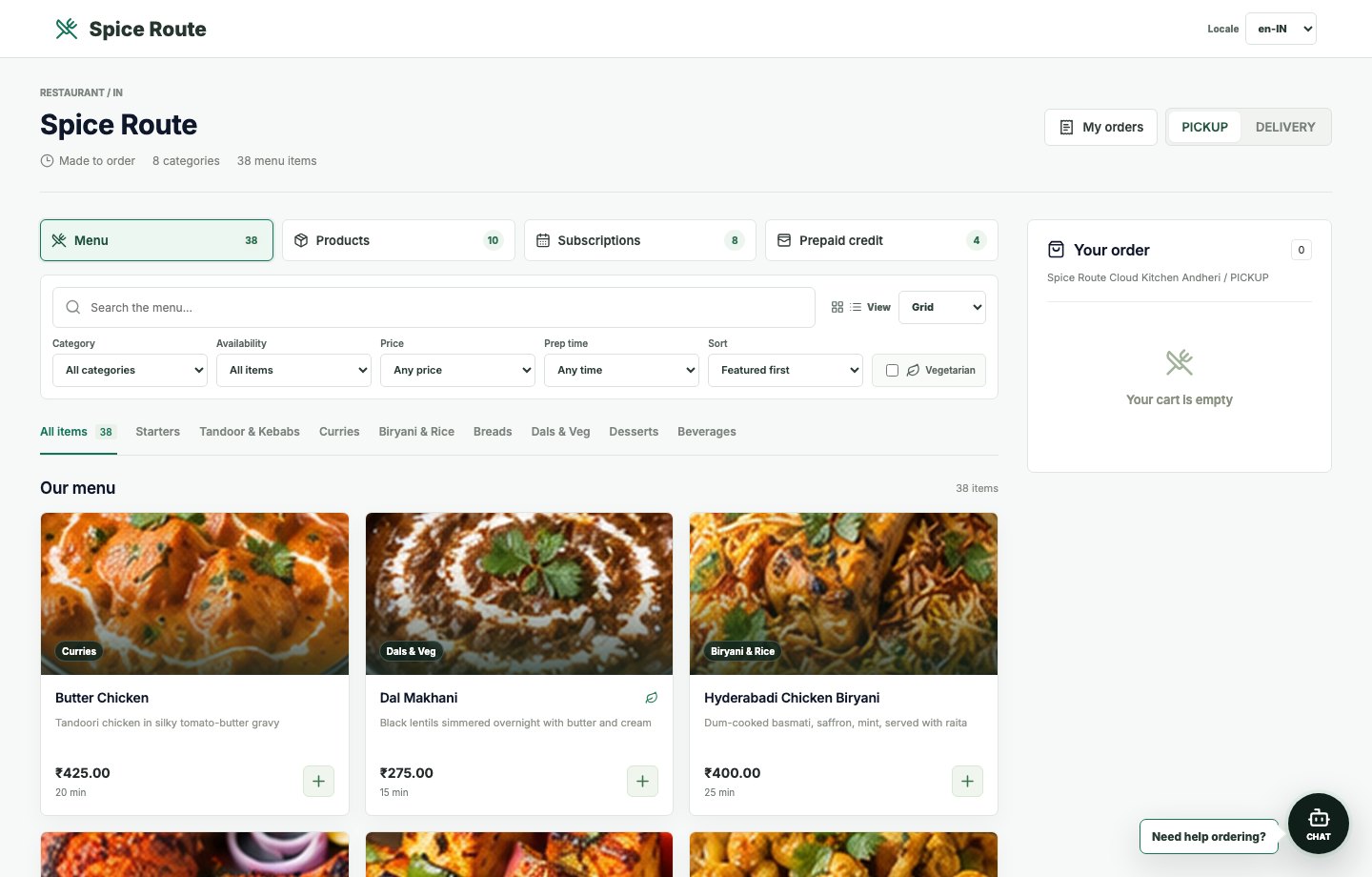 Restaurant menu storefront
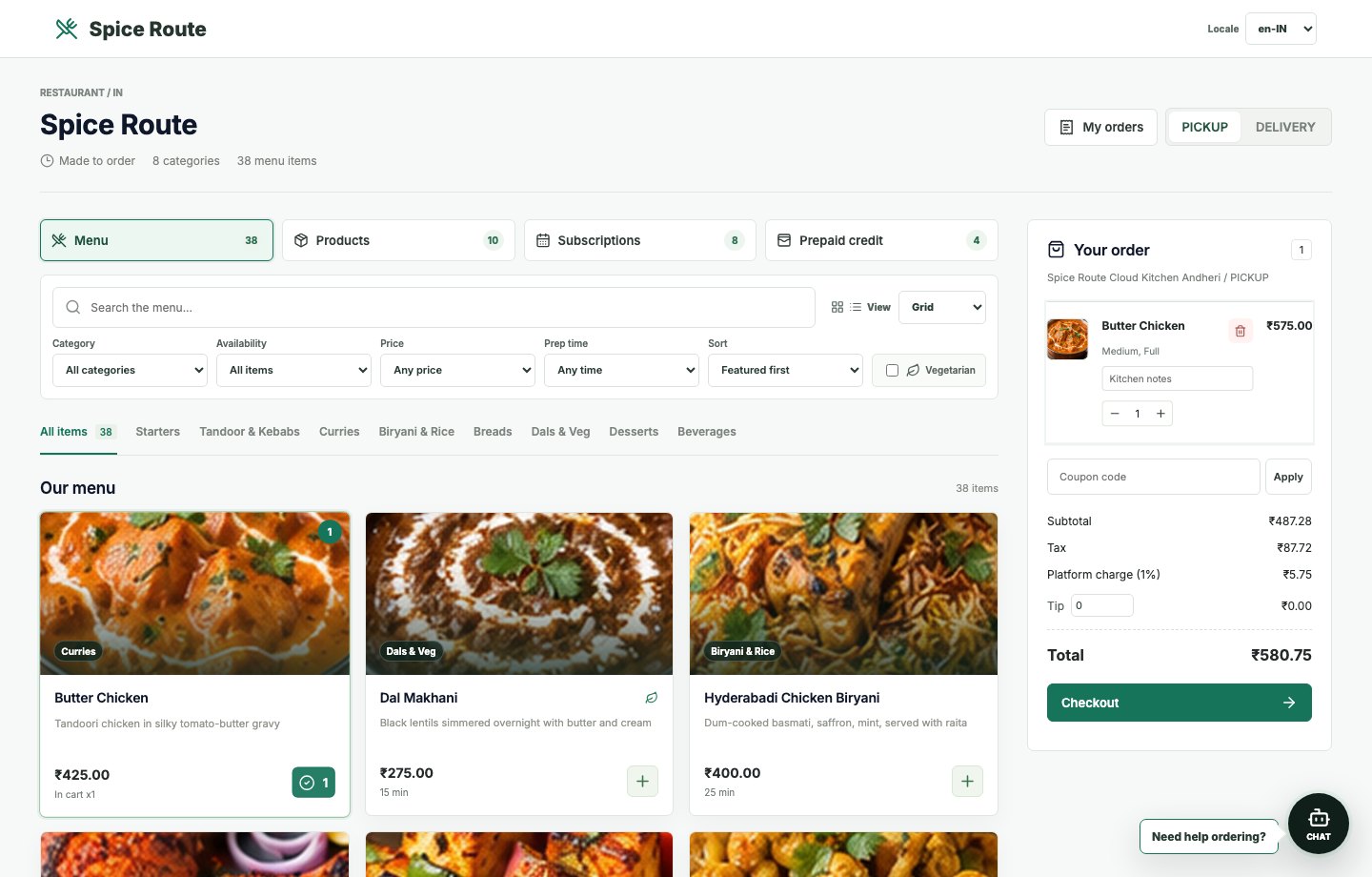 Customer cart after menu selection
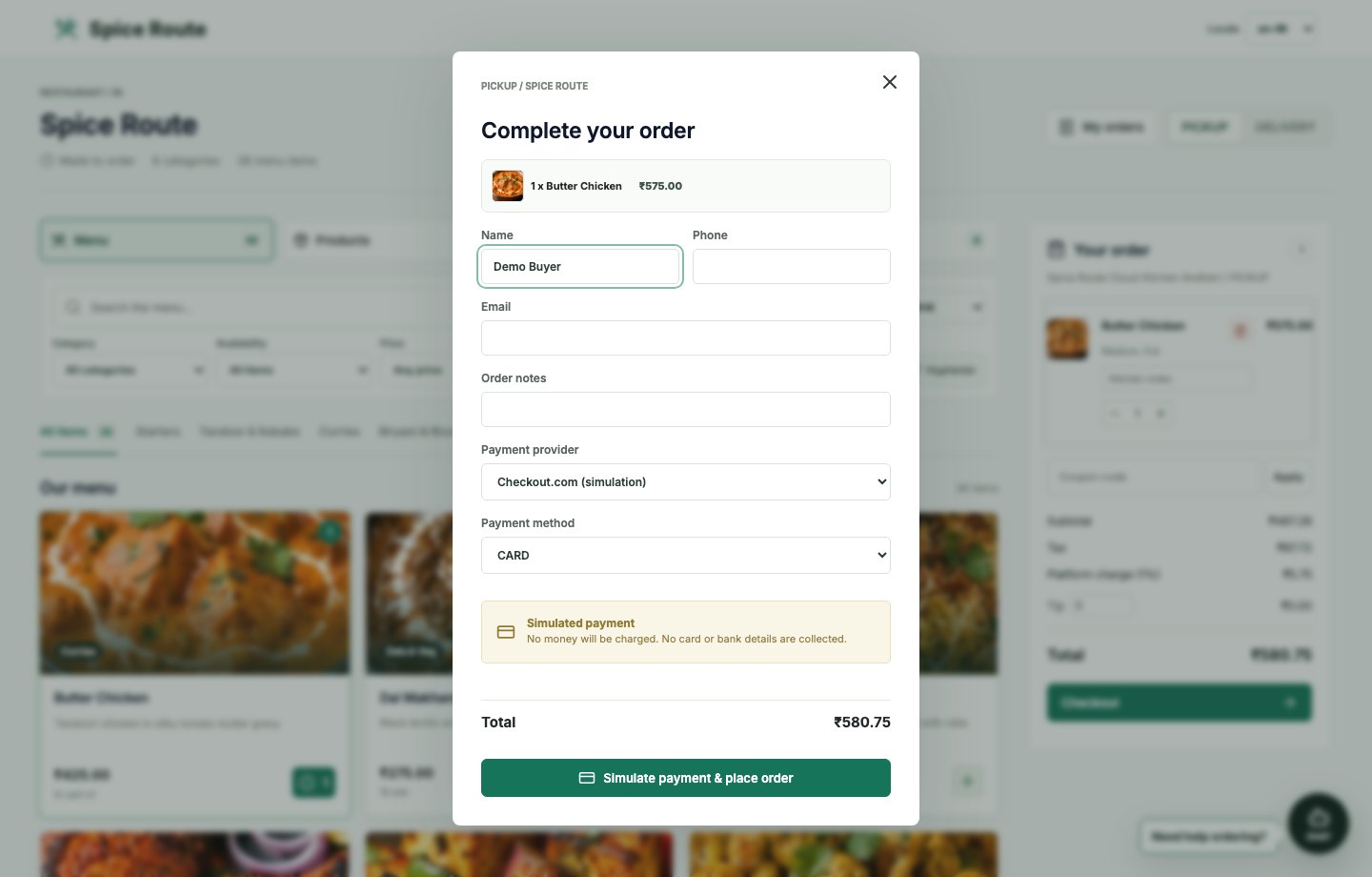 Restaurant menu checkout
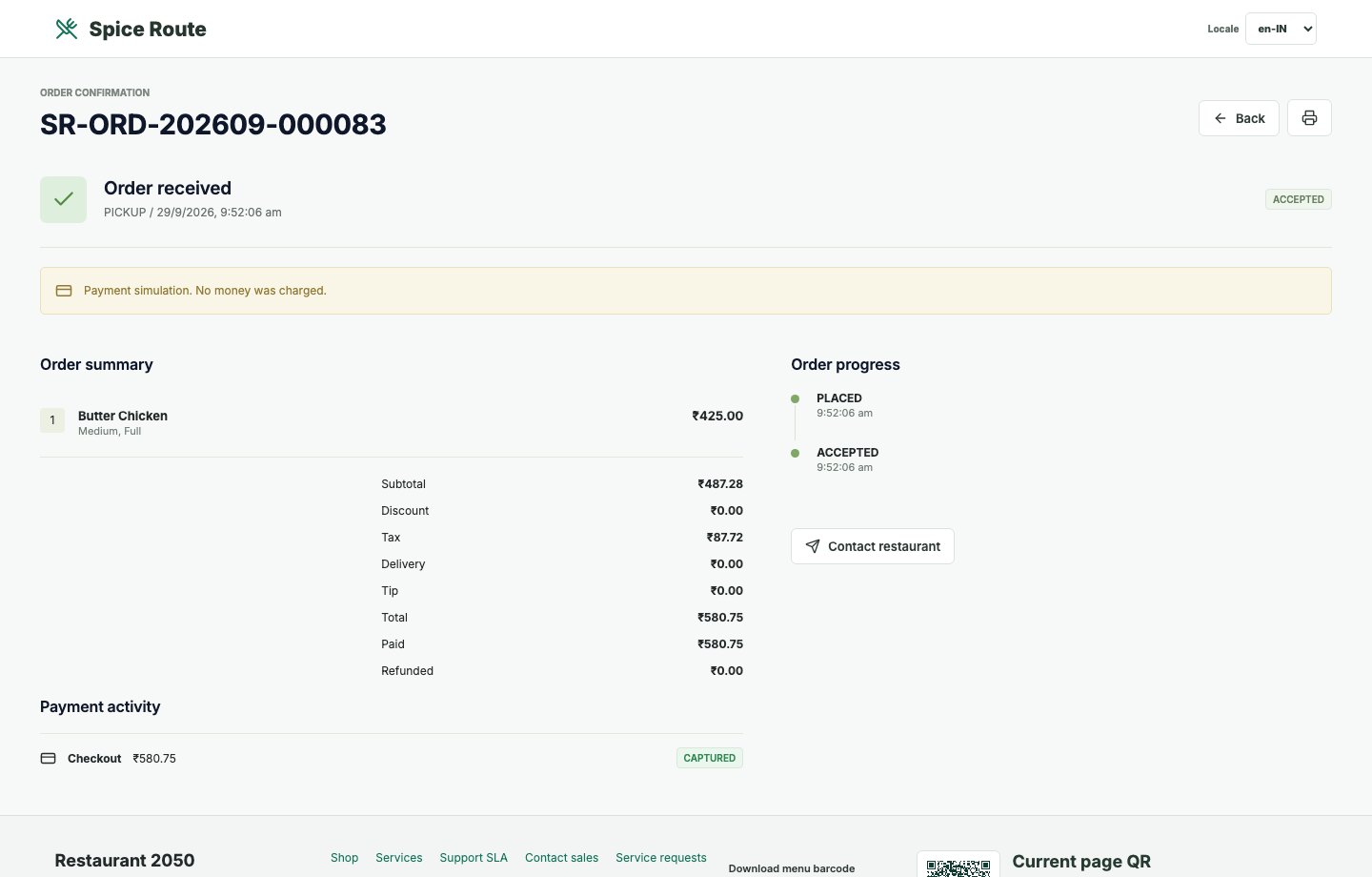 Order confirmation and receipt
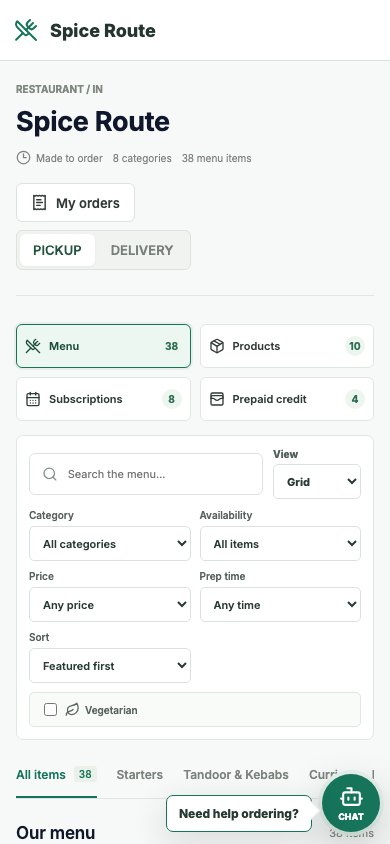 Mobile restaurant menu
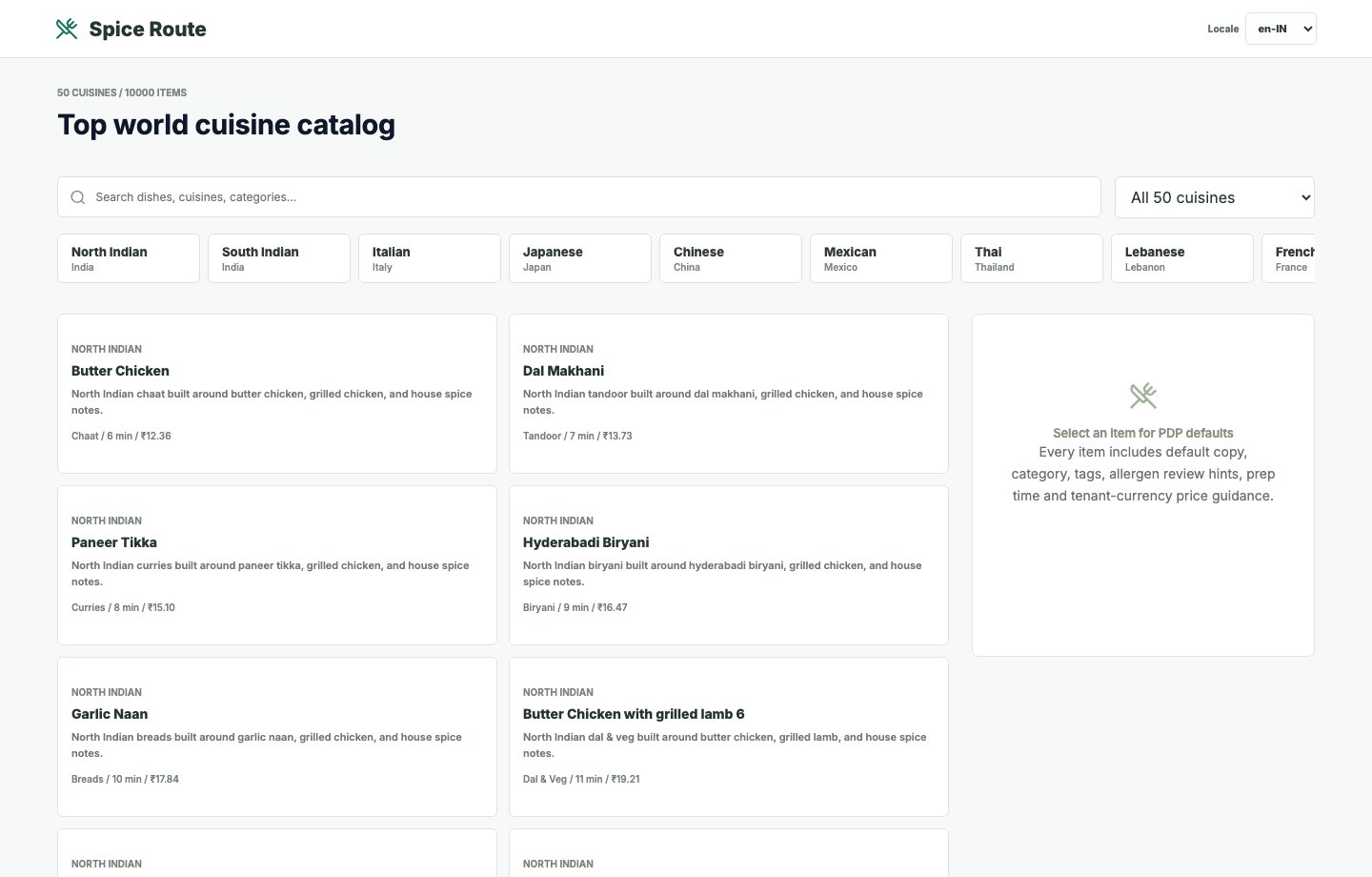 Cuisine library and menu discovery
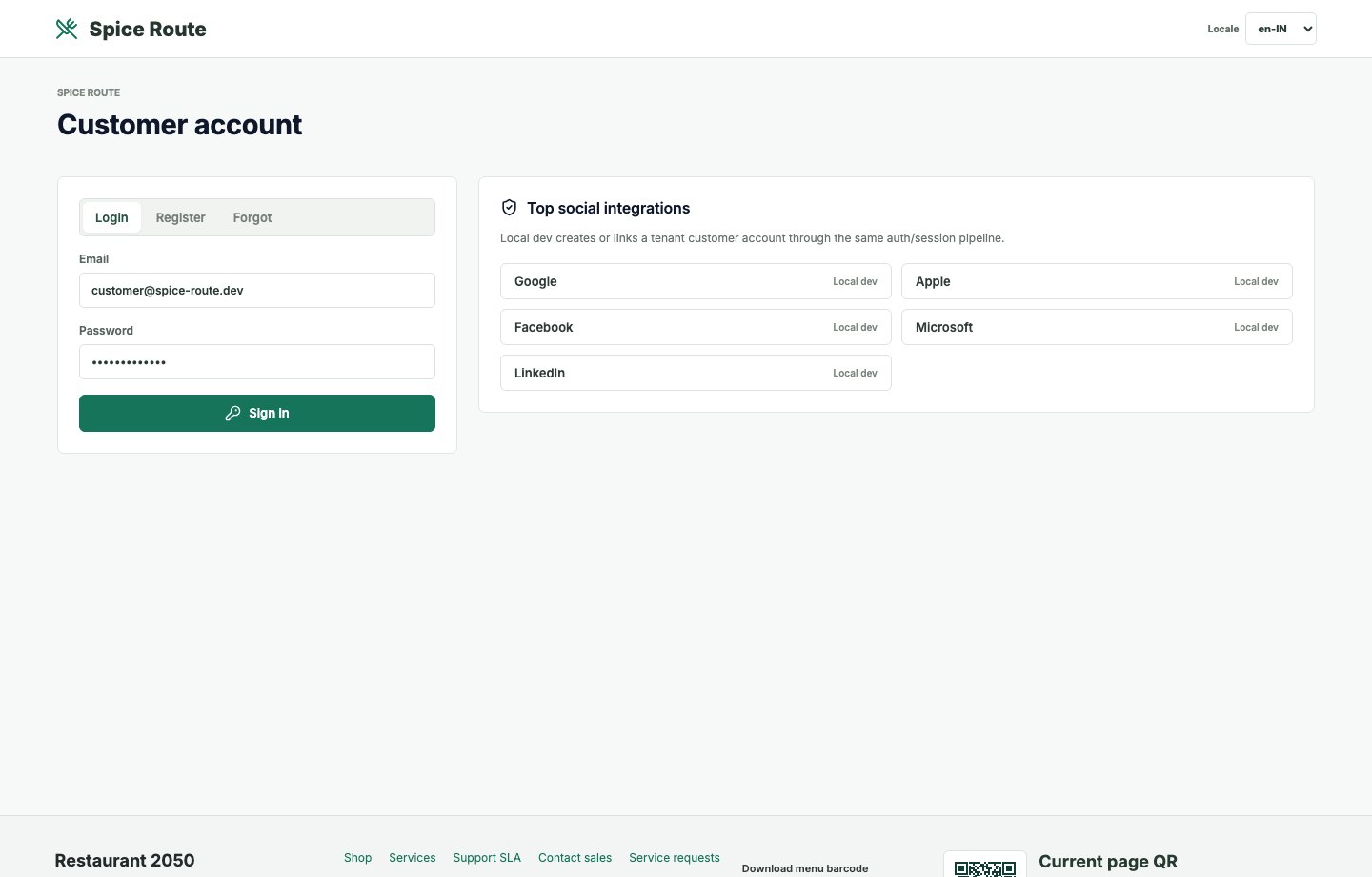 Customer account and login surface
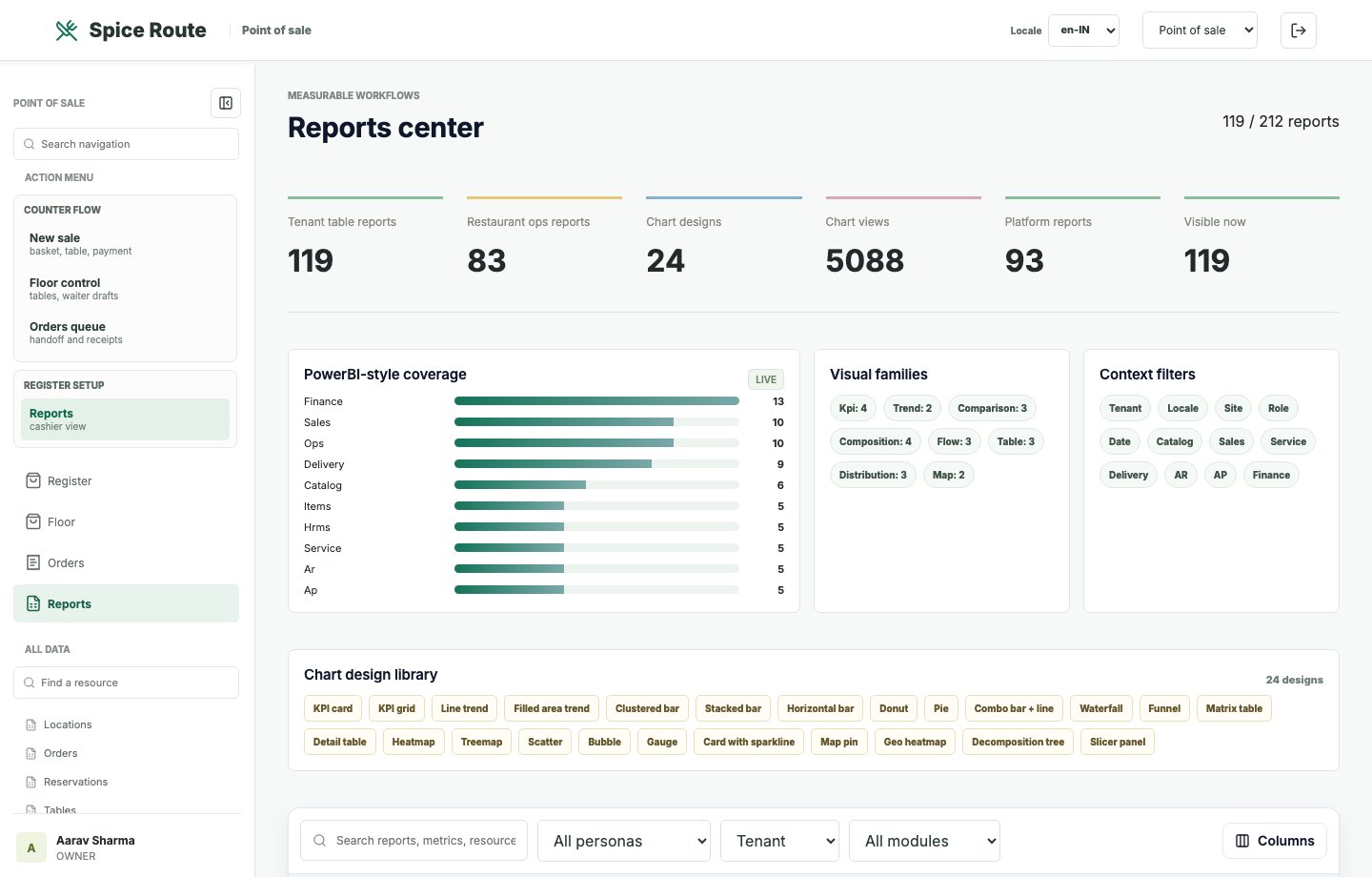 POS reports center
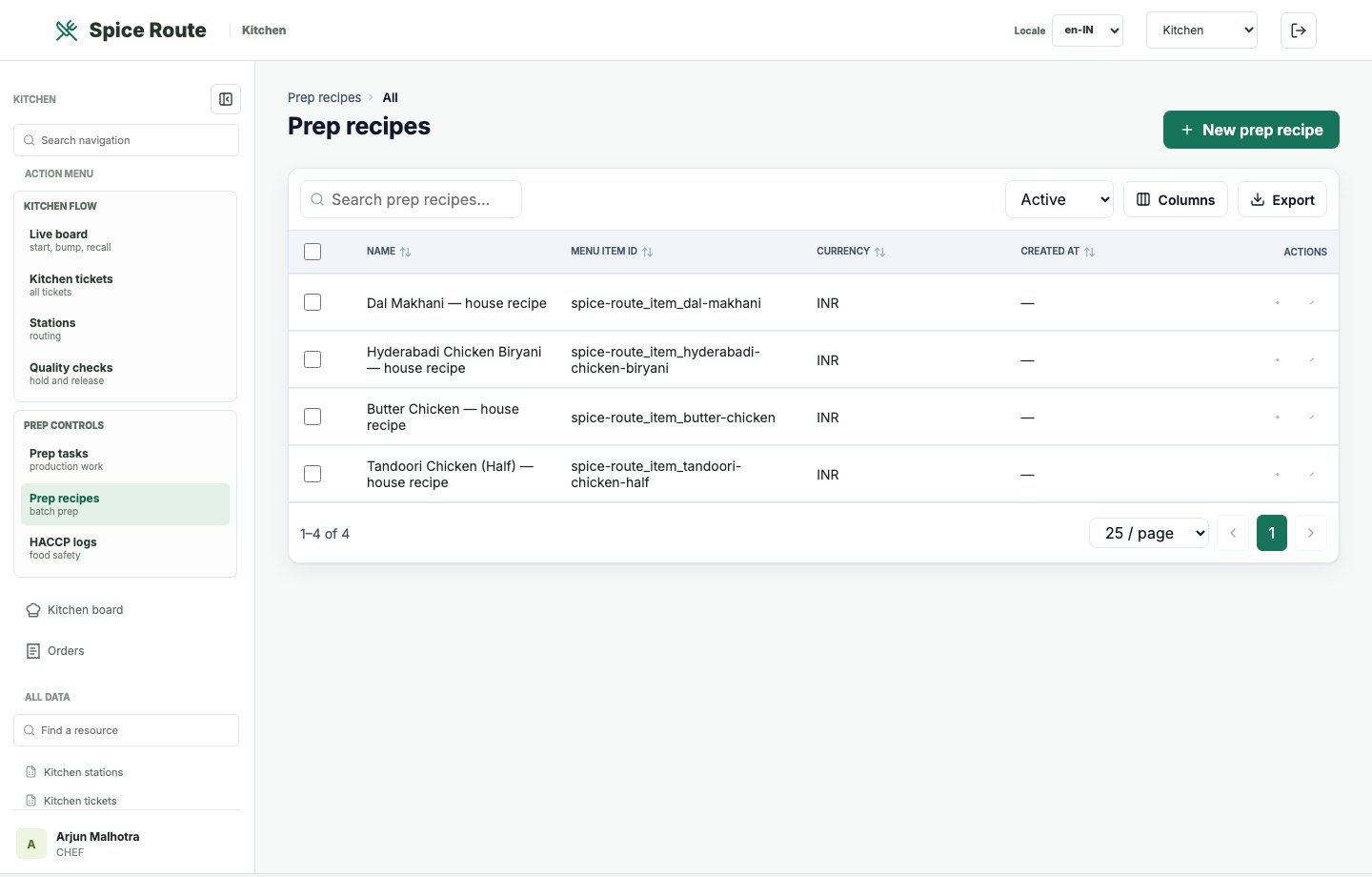 Prep recipes and production standards
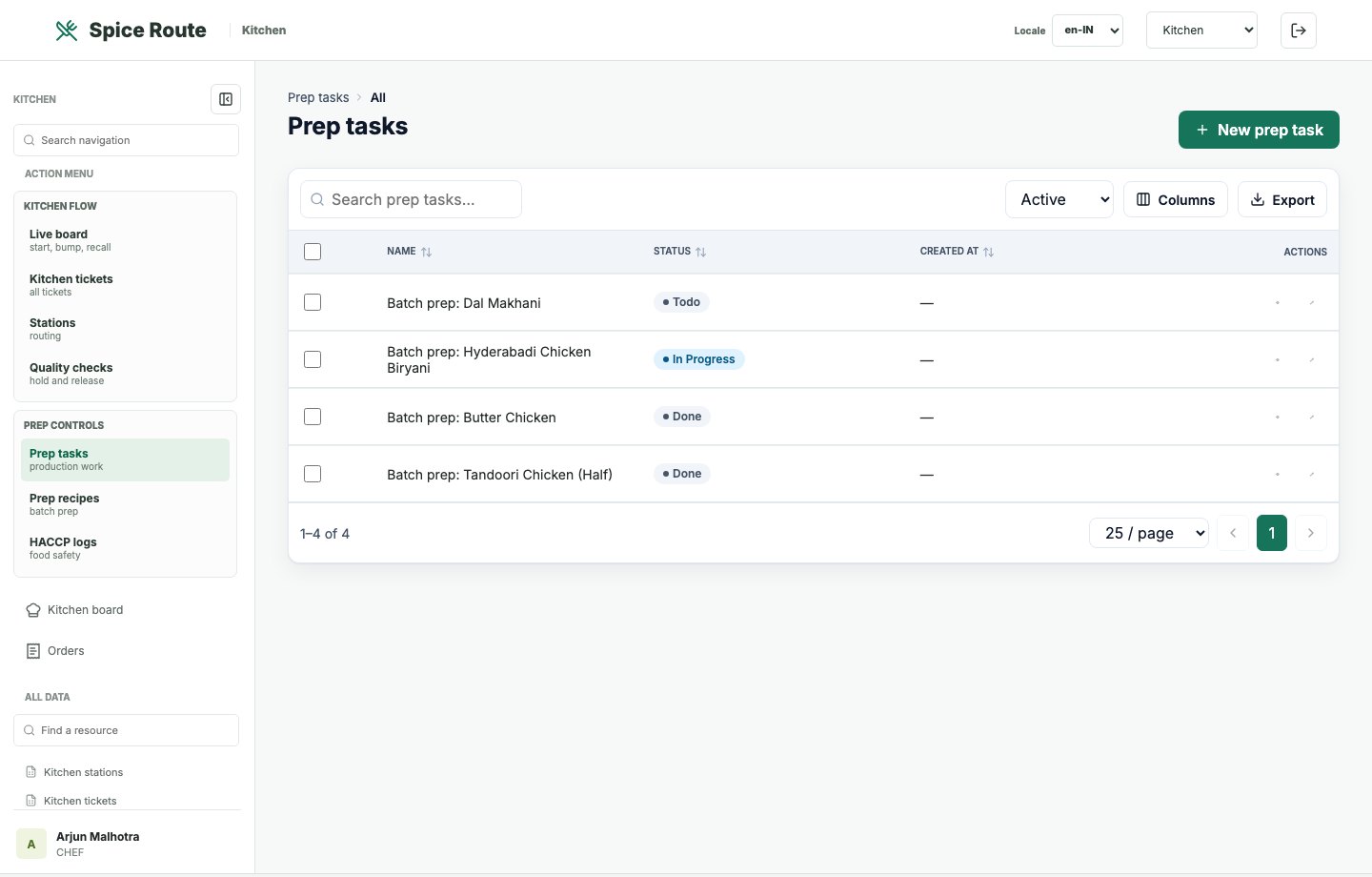 Kitchen prep tasks
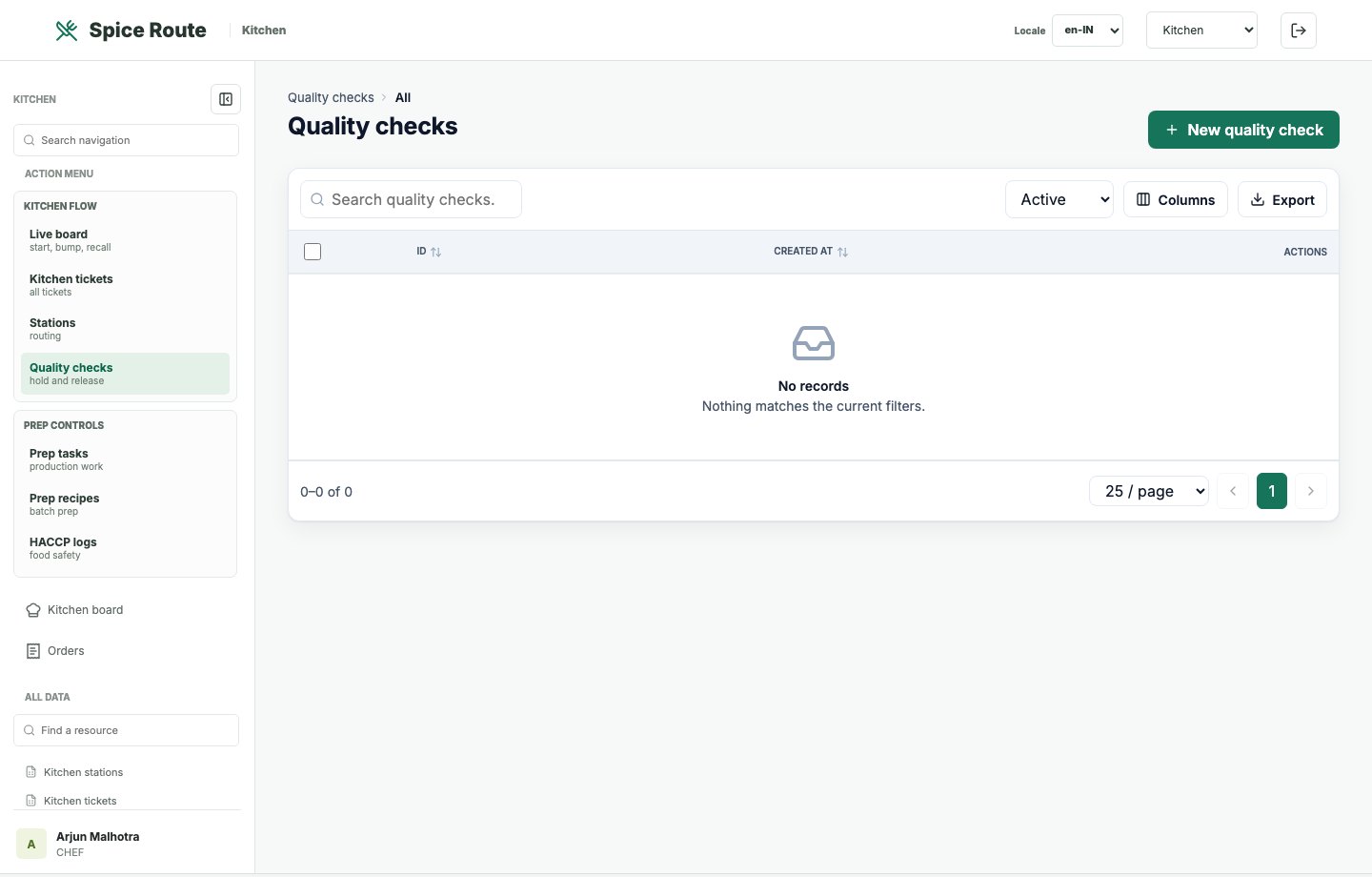 Quality checks
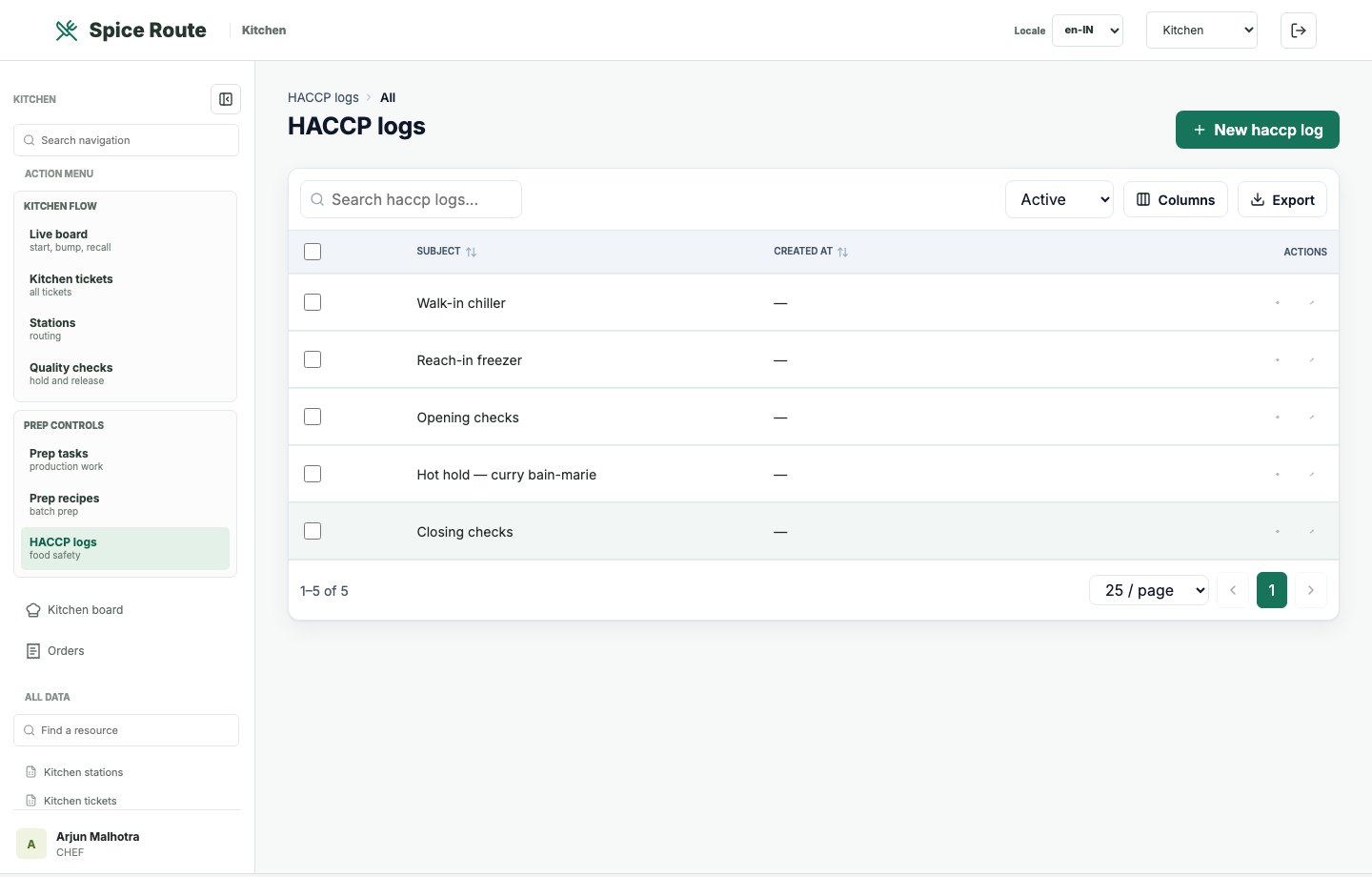 HACCP and food-safety logs
Sales CTA
Contact sales@t24global.com or call +91 9972769456.
Restaurant 2050
Share your sales, service, investor, product issue, or enhancement request. Our Restaurant 2050 team will route it to the right owner and follow up with the next step.